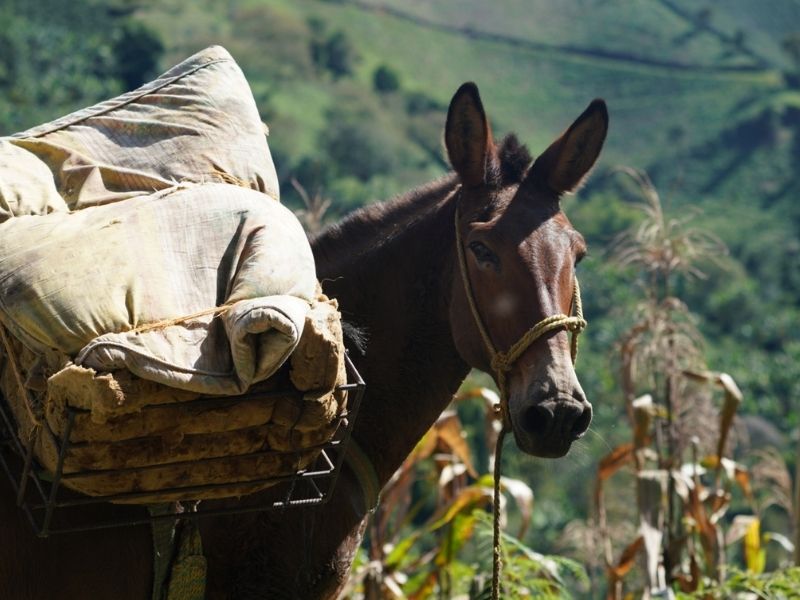
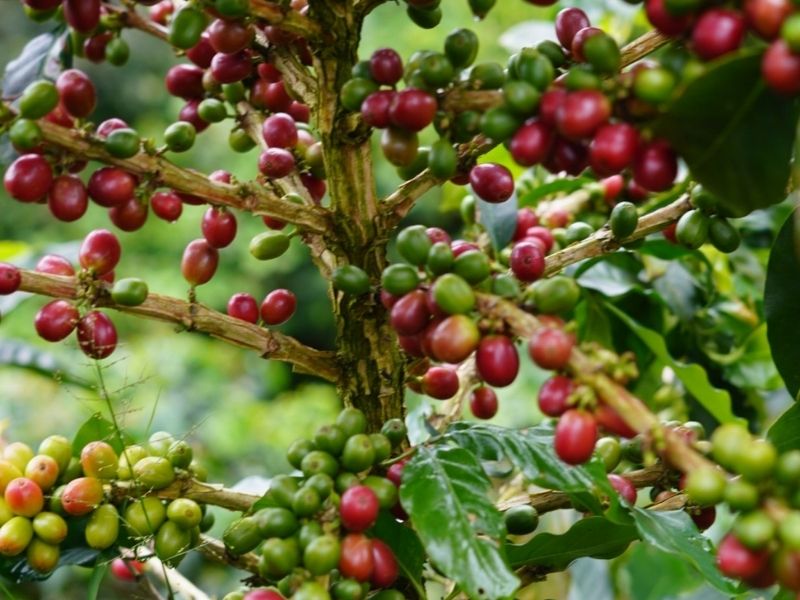
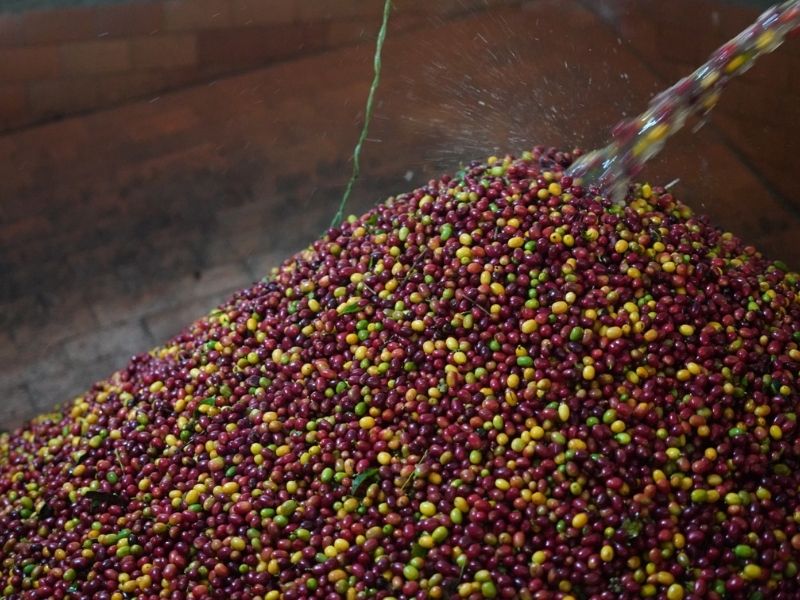
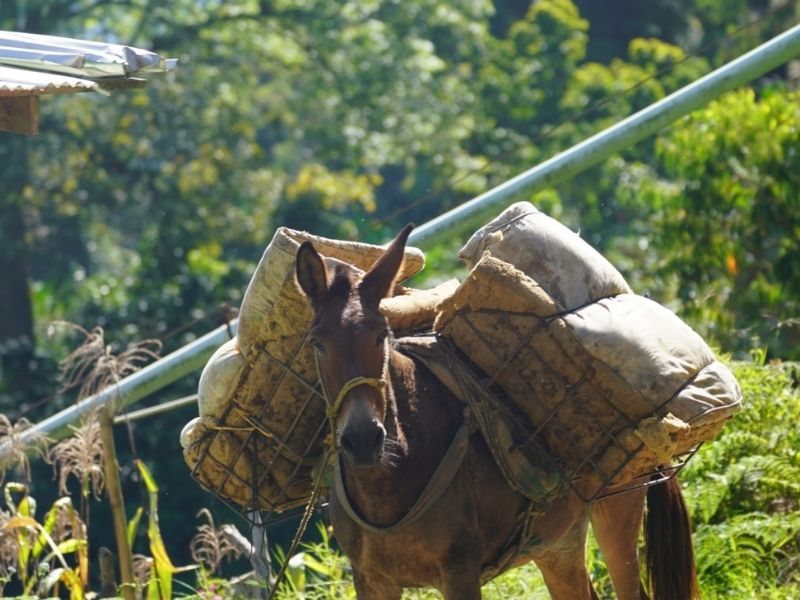
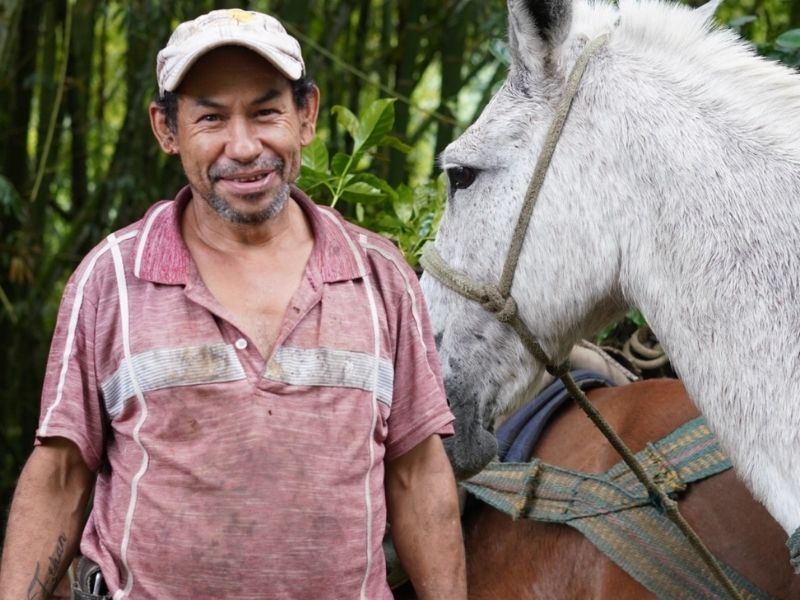
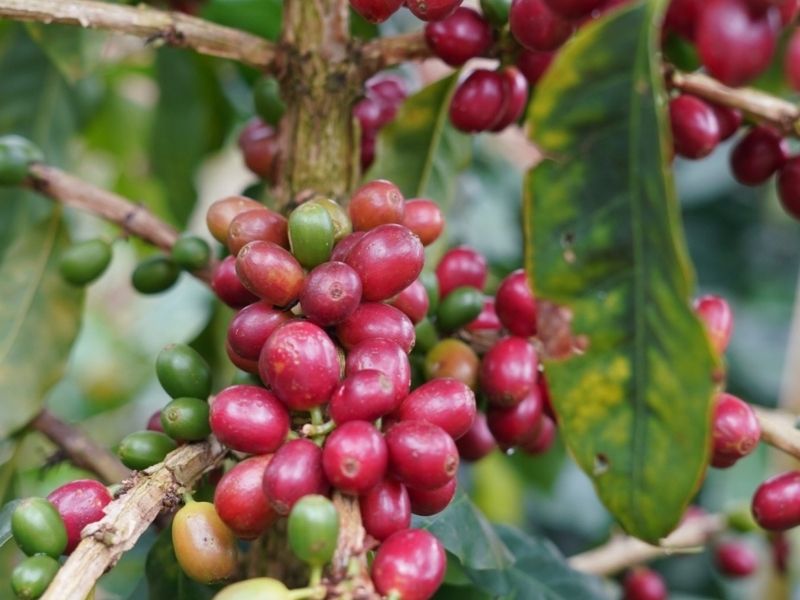
At Lozana Coffee we organise our sourcing into two distinct coffee lines. This structure allows us to offer both reliable, scalable coffees and smaller, more distinctive lots that highlight the diversity of Antioquia’s coffee landscapes.
Our Classic Colombian Coffees represent the traditional flavour profile that has made Colombian coffee recognised around the world. These coffees typically show a balanced body, bright citric acidity and a smooth, clean finish.
They are sourced from several smallholder family farms across Antioquia and carefully selected to provide consistency and reliability for roasters. Because multiple producers contribute to these lots, volumes tend to be larger, making them suitable for both single-origin offerings and espresso blends.
This line forms the foundation of our portfolio and offers dependable supply with the character expected from high-quality Colombian coffee.
Unique Microlots
Our Unique Microlots showcase the individuality of small-scale producers across Antioquia. These coffees are purchased directly from independent farmers and are produced in much smaller quantities.
Each microlot reflects the specific conditions of the farm where it was grown — from altitude and microclimate to processing methods and varietal selection. As a result, flavour profiles can vary widely, often highlighting more expressive or distinctive cup characteristics.
Availability for these lots is limited, but they offer roasters the opportunity to feature coffees with exceptional quality and a clear sense of origin.
Lozana Supremo is sourced from several smallholder family farms across the Antioquia department, primarily within a 100-mile radius of Medellín, where the coffee is processed and prepared for export.
The name Supremo refers to the bean size classification. This coffee is composed exclusively of larger screen sizes (17 and 18), which results in a more uniform roast profile and contributes to improved consistency during roasting.
The lot is composed predominantly of Castillo and Caturra varieties, with smaller contributions from Colombia and Variedad 2000. Grown between 1500 and 2000 metres above sea level, Lozana Supremo offers a classic Colombian cup profile with balanced body, bright acidity and notes of caramel sweetness.
This coffee is particularly well suited for roasters looking for a reliable Colombian offering that performs consistently across both espresso and filter preparations.
Classic Colombian
Cabresto
Line: Classic Colombian Coffee
Origin: Andes, Antioquia, Colombia
Altitude: 1800–2000 masl
Varieties: Castillo, Caturra
Process: Washed
Producers: ~30 smallholder farms
Processing Details
Cabresto takes its name from the coffee association through which this coffee is sourced. It is cultivated exclusively in the municipality of Andes in western Antioquia, particularly within the rural districts of Santa Inés and Santa Rita.
The coffee comes from approximately 30 smallholder farms, many of which are smaller than 0.5 hectares. These farms sit at elevations between 1800 and 2000 metres above sea level, where cooler night temperatures play an important role in the development of the coffee cherries.
The region benefits from humid air currents coming from the Chocó lowlands, which move across the cordillera and contribute to cooler nights and slower cherry maturation. This extended development period allows sugars within the fruit to develop more gradually, contributing to brighter acidity and greater flavour clarity in the cup.
Cabresto is known for its vibrant citric acidity, balanced medium body and flavour notes of panela and chocolate. Its versatility makes it suitable both as a clean filter coffee or as an expressive espresso when roasted slightly darker.
Unique Microlot Series
Anaerobic Pink Bourbon
Origin: Támesis, Antioquia, Colombia
Farm: Puerto Arturo
Producer: Elkin Arcila
Altitude: 1950 masl
Variety: Pink Bourbon
Process: Anaerobic Washed
Processing Details
This microlot is produced by Elkin Arcila at his 1.5 hectare farm, Puerto Arturo, located in the municipality of Támesis in western Antioquia. The farm sits at approximately 1950 metres above sea level overlooking the Cartama Valley, an area known for producing expressive high-altitude coffees.
For this lot, ripe cherries are carefully selected and sorted by size before undergoing a controlled anaerobic fermentation. The cherries are placed in sealed 55-gallon tanks where they ferment for approximately 100 hours. During this stage, Brix levels and pH are closely monitored to maintain consistency throughout the fermentation process. After fermentation, the cherries are pulped, lightly washed and then dried on raised African beds.
The result is a complex and aromatic coffee with notes of red berries such as raspberry and blackcurrant, complemented by floral jasmine aromas. The cup presents bright acidity, a light-medium body and a long lingering finish. This coffee performs particularly well when roasted on the lighter side, allowing its vibrant fruit character to fully express itself.
Unique Microlot Series
Tapartó Co-Ferment
Origin: Tapartó, Antioquia, Colombia
Farm: El Socorro
Producer: John Franco
Altitude: 1900 masl
Variety: Castillo
Process: Fruit Co-Fermentation
Processing Details
This distinctive microlot is produced by third-generation coffee farmer John Franco at his farm El Socorro in the municipality of Tapartó, Antioquia. The region is known for its steep slopes and high rainfall, conditions that contribute to slow cherry maturation and expressive cup profiles.
For this process, carefully selected ripe Castillo cherries are placed in sealed fermentation barrels together with fruits grown on the same farm, including guava, figs, lemongrass and mandarins. The sealed barrels create an anaerobic environment where the coffee co-ferments with the fruit for several days, with the exact duration adjusted depending on temperature and climatic conditions.
John Franco personally supervises each stage of the process, applying years of experience to ensure balance and consistency in the final cup.
The resulting coffee displays vibrant tropical characteristics with notes of pineapple and banana, complemented by a long wine-like finish. This microlot offers roasters an opportunity to feature an adventurous and distinctive coffee that stands apart on a menu.
Unique Microlot Series
Luis Montoya– Chitoso
Origin: Urrao, Antioquia
Producer: Luis Montoya
Altitude: ~2000 masl
Variety: Chiroso
Process: Washed
Processing Details
This microlot is produced by Luis Eduardo Montoya, a leading figure in the emergence of Urrao, Western Antioquia, as a region increasingly recognised for its high-scoring coffees and exceptional varietals.
Luis is widely regarded as a driving force within the local community — a grower synonymous with leadership, innovation, and consistency. At elevations above 2,100 m.a.s.l., he cultivates Yellow Bourbon, Gesha, and Chiroso, all known for their clarity, complexity, and cup quality.
His farm is both extensive and carefully preserved, forming part of the Red de Reservas de la Sociedad Civil, reflecting a strong commitment to environmental stewardship and sustainable production.
Unique Microlot Series
Yellow Bourbon – Wilton Benitez
Origin: Piendamó, Cauca, Colombia
Farm: Granja Paraíso 92
Producer: Wilton Benitez
Altitude: ~1900 masl
Variety: Yellow Bourbon
Process: Double Anaerobic
Processing Details
This microlot is produced at the renowned Granja Paraíso 92 farm in Piendamó, Cauca, by internationally recognised coffee producer Wilton Benitez. While Lozana Coffee focuses primarily on Antioquia, this coffee represents a special collaboration with one of Colombia’s most innovative producers.
Wilton Benitez is widely known for pioneering advanced fermentation techniques and experimental processing methods. Much of the production from his farm is exported to Asian markets, with only a limited portion reaching Europe and the UK.
This Yellow Bourbon undergoes a carefully controlled double anaerobic fermentation, resulting in a vibrant and precise cup profile.
The coffee presents bright, crisp acidity reminiscent of green apple and kiwi, accompanied by a clean structure and a long lingering finish.
Contact Us
If you would like to request samples, discuss coffee availability, or arrange a cupping session, please feel free to get in touch.
We aim to respond to all enquiries as soon as possible.